

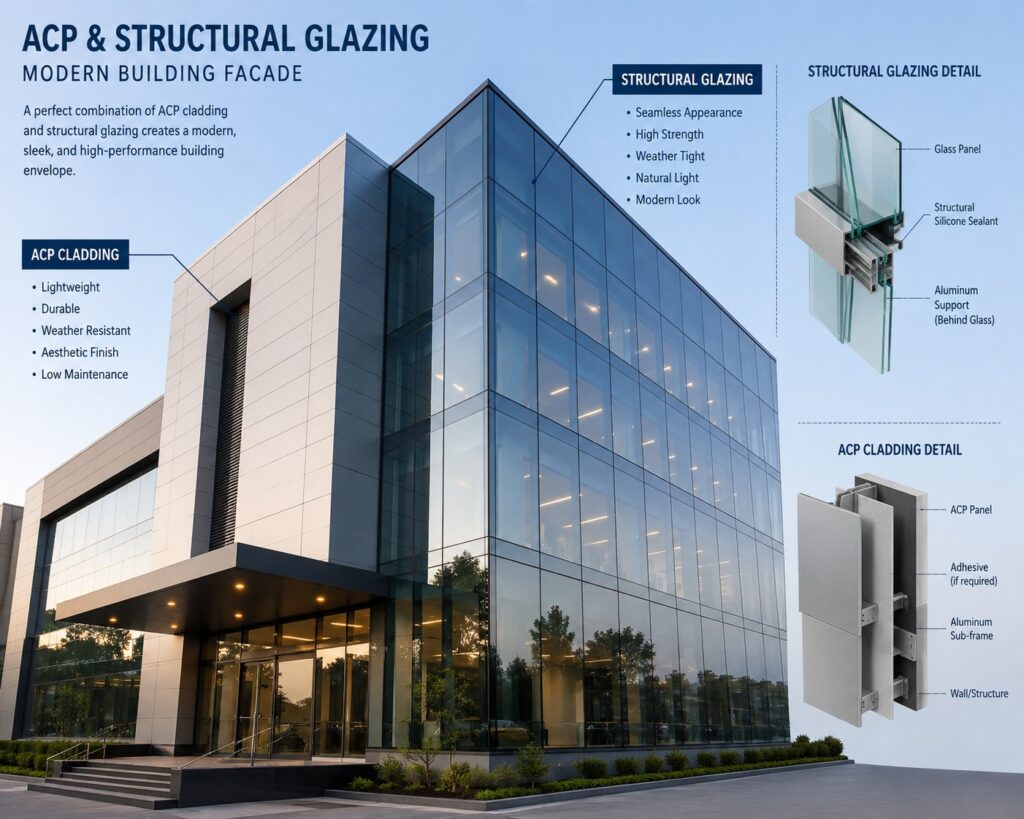
Walk past any new office park, hospital, or retail complex coming up in South India today, and you’ll notice something: the exterior isn’t just a wall anymore. It’s a statement. A building’s facade has quietly become one of the biggest factors in how a business is perceived before anyone even steps inside — and for developers, it’s just as much about long-term performance as it is about looks.
That’s why ACP facades and structural glass glazing have moved from “nice-to-have” architectural extras to standard specifications on commercial projects across the region.
Why Facades Matter More Than Ever
A building’s exterior does a lot of quiet work. It shapes first impressions, sure — but it also affects energy bills, maintenance schedules, and how well the structure holds up against South India’s mix of intense heat, monsoon downpours, and coastal humidity.
Older plaster-and-paint finishes simply weren’t built for that kind of punishment. They fade, crack, and need repainting every few years, which adds up fast in maintenance costs. Aluminium composite panels and structural glazing systems were designed to solve exactly this problem: durability and design flexibility, without the constant upkeep.
What Makes ACP Facades So Popular with Architects
Ask any architect why ACP (Aluminium Composite Panel) has become a go-to material for commercial exteriors, and you’ll hear a fairly consistent list:
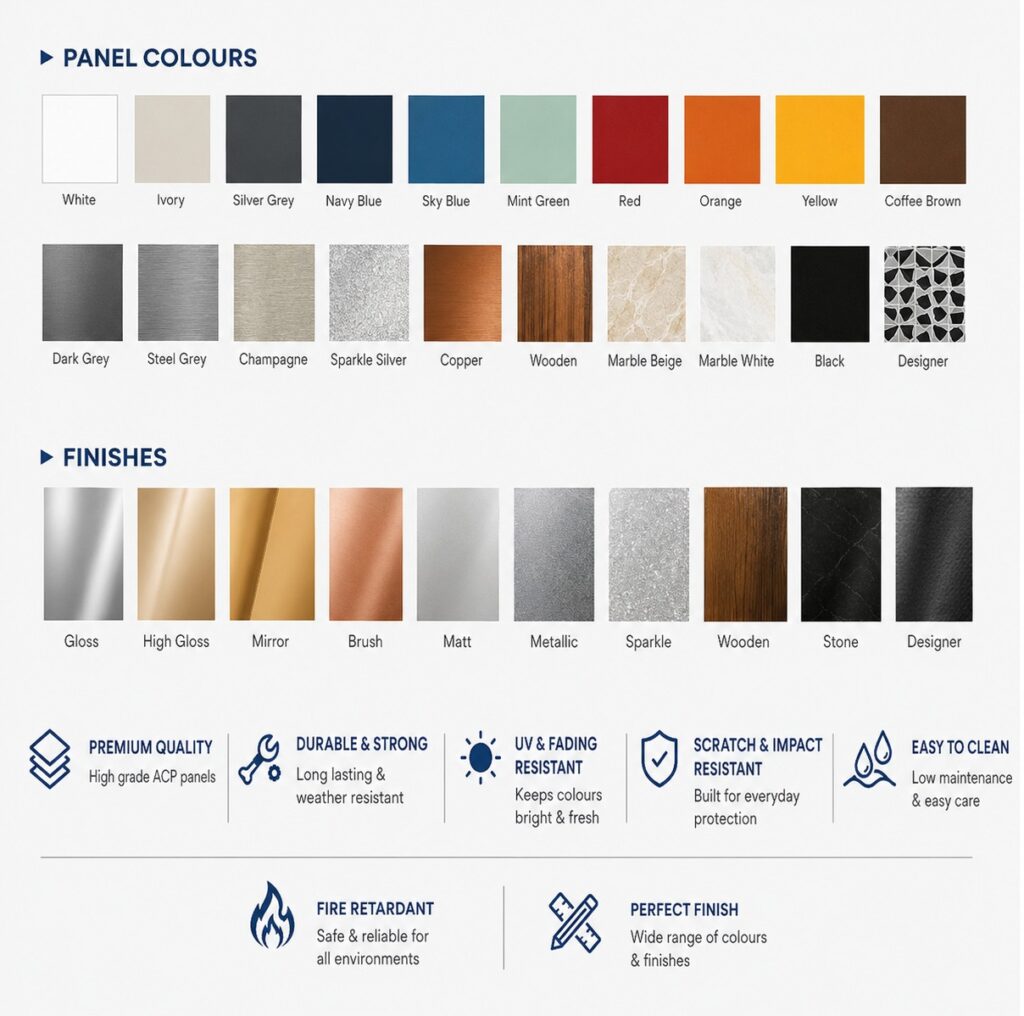
- A huge range of colours, textures, and metallic finishes to choose from
- Lightweight panels that don’t add unnecessary structural load
- Strong resistance to sun, rain, and humidity
- Quicker installation than traditional plaster or masonry finishes
- Minimal maintenance over the building’s lifetime
- Clean, sharp lines that suit contemporary elevations
Beyond aesthetics, ACP panels also support contemporary architectural detailing through clean joint lines, concealed fixing systems, and flexible fabrication possibilities. It’s this combination — architectural aesthetics and practicality — that’s made ACP facades a common sight on office buildings, hospitals, educational campuses, hotels, shopping complexes, and commercial showrooms alike.
Structural Glass Glazing: Letting the Outside In
If ACP gives a building its character, structural glass glazing gives it light and openness. Modern glazing systems let architects design expansive, transparent building envelopes without compromising on structural strength.
Pair that with insulated glass units and thermally broken aluminium framing, and you get facades that don’t just look elegant — they actually improve thermal comfort and cut down on daytime artificial lighting. That’s why glass features so prominently in entrance lobbies, corporate office fronts, hospital atriums, hotel lobbies, and premium retail storefronts.
The Real Winning Combination: ACP + Structural Glass Together
Here’s the thing — ACP and structural glass aren’t rivals. They’re often used together, and that pairing is where a lot of the best commercial architecture in South India is heading right now.
Combining both systems typically delivers:
- A more refined, elegant architectural look
- Better protection against weather extremes
- Improved energy efficiency
- Lower long-term maintenance costs
- More flexibility in design
- Stronger property value over time
For developers who want a building that looks premium today and still performs well a decade from now, this integrated approach has become the practical choice rather than the exception.
A Region on the Move: South India’s Commercial Construction Boom
Cities like Chennai, Bengaluru, Hyderabad, Coimbatore, Kochi, Madurai, and Trichy are seeing a genuine wave of commercial development — new hospitals, hotels, IT parks, office campuses, and retail spaces, all competing for attention and functionality in equal measure.
As sustainability goals and corporate branding take on more weight in architectural planning, it’s no surprise that demand for professionally engineered facade systems keeps climbing across the region.
The choice of facade system is no longer driven by appearance alone. Architects increasingly evaluate lifecycle cost, maintenance requirements, sustainability goals, and occupant comfort before selecting exterior materials for commercial developments.
Why the Right ACP Facade Contractor Matters Just as Much as the Materials
Here’s something worth remembering: great materials alone don’t guarantee a great facade. The engineering, fabrication, and installation behind the scenes are what actually determine whether that facade still looks sharp — and performs well — ten years down the line.
Experienced facade contractors think through the details most people never notice: panel layouts, expansion joints, drainage paths, how the structure handles wind loads, and installation tolerances. Get these wrong, and even the best materials won’t hold up.
Specialist contractors with experience in commercial facade systems play a critical role in translating architectural concepts into durable, high-performing building exteriors. Companies such as Galaxy Graphics & LED are helping developers and architects deliver integrated ACP facade and structural glazing solutions across Tamil Nadu and South India — turning design intent into buildings that actually perform, not just on day one, but for years after.
About the Author
Mr.Ahmad Mydeen is the Founder of Galaxy Graphics & LED, specializing in ACP facade contracting, structural glass glazing, and commercial exterior solutions across Tamil Nadu and South India. He works closely with architects, developers, hospitals, retail brands, and commercial property owners to deliver facade systems that are as durable as they are visually refined.

